
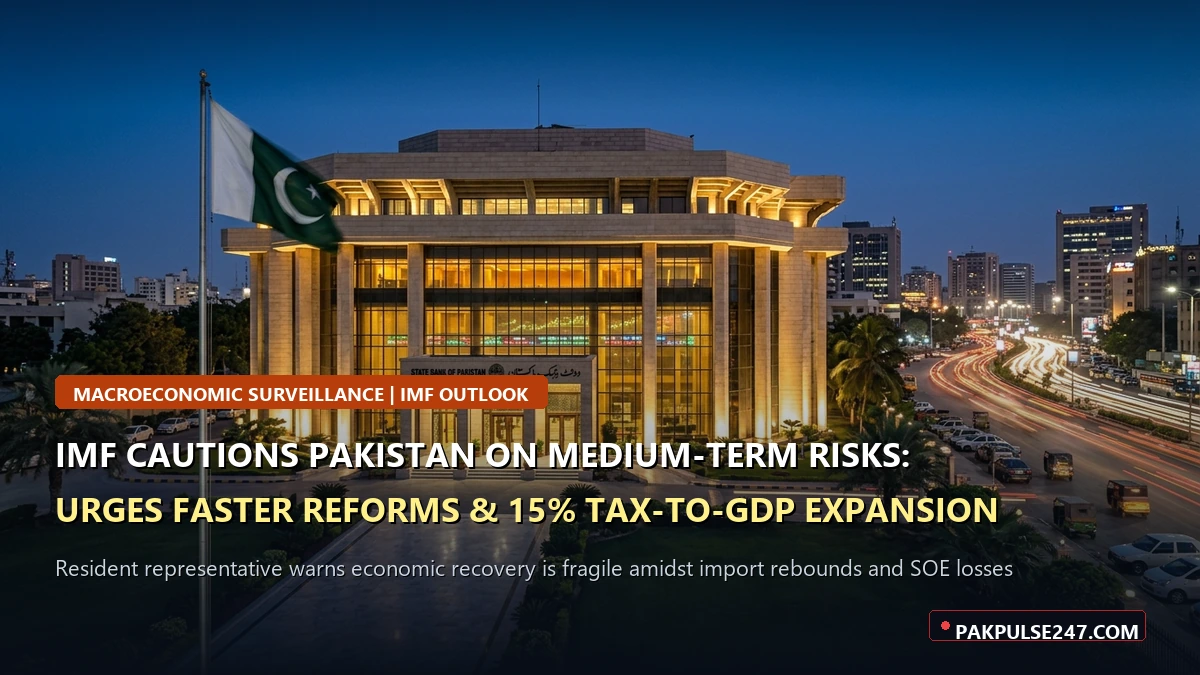
ISLAMABAD: Delivering a sober assessment of Pakistan’s macroeconomic trajectory, the International Monetary Fund (IMF) has warned that the country's hard-won economic stabilization remains vulnerable to medium-term shocks unless Islamabad aggressively deepens structural taxation reforms and decisively tackles chronic state-owned enterprise (SOE) drains.
Fragile Recovery and Prospective External Pressures
Addressing the Pakistan Prosperity Forum organized by the Policy Research Institute of Market Economy (PRIME), IMF Resident Representative for Pakistan, Dr. Mahir Binici, highlighted that while immediate balance-of-payments pressures have eased under the current program, the fiscal outlook could weaken over the medium term. The Fund noted that rebounding domestic industrial demand will naturally expand the import bill, while workers' remittances may moderate from recent record highs.
The 15% Tax-to-GDP Imperative
The multilateral lender emphasized that Pakistan cannot achieve sustainable fiscal sovereignty without elevating its tax-to-GDP ratio from current single-digit averages to at least 15 percent over the medium term. Dr. Binici underscored that rather than burdening compliant salaried workers and existing manufacturing corporations with incremental surcharges, revenue authorities must aggressively broaden the tax net, eliminate distortionary sector-specific exemptions, and enforce digital compliance across retail, wholesale, and real estate markets.
Energy Circular Debt and SOE Bleeding
The IMF review also focused heavily on institutional inefficiencies in the energy sector and bleeding public sector enterprises. Despite successive tariff adjustments, power sector circular debt continues to impose severe fiscal overhangs on the federal budget. The Fund reiterated that swift privatization or restructuring of loss-making state entities remains an indispensable benchmark for unlocking sustainable development capital.
Government Response and Reform Commitments
Responding to the assessment, senior officials from the Ministry of Finance reaffirmed the government's commitment to staying the course on fiscal consolidation, citing continuous primary surplus targets, ongoing FBR transformation roadmaps, and the phased rollout of provincial agricultural income taxation frameworks. For real-time updates on IMF benchmarks, economic data, and fiscal policy, visit the Pak Pulse 247 News Desk.