
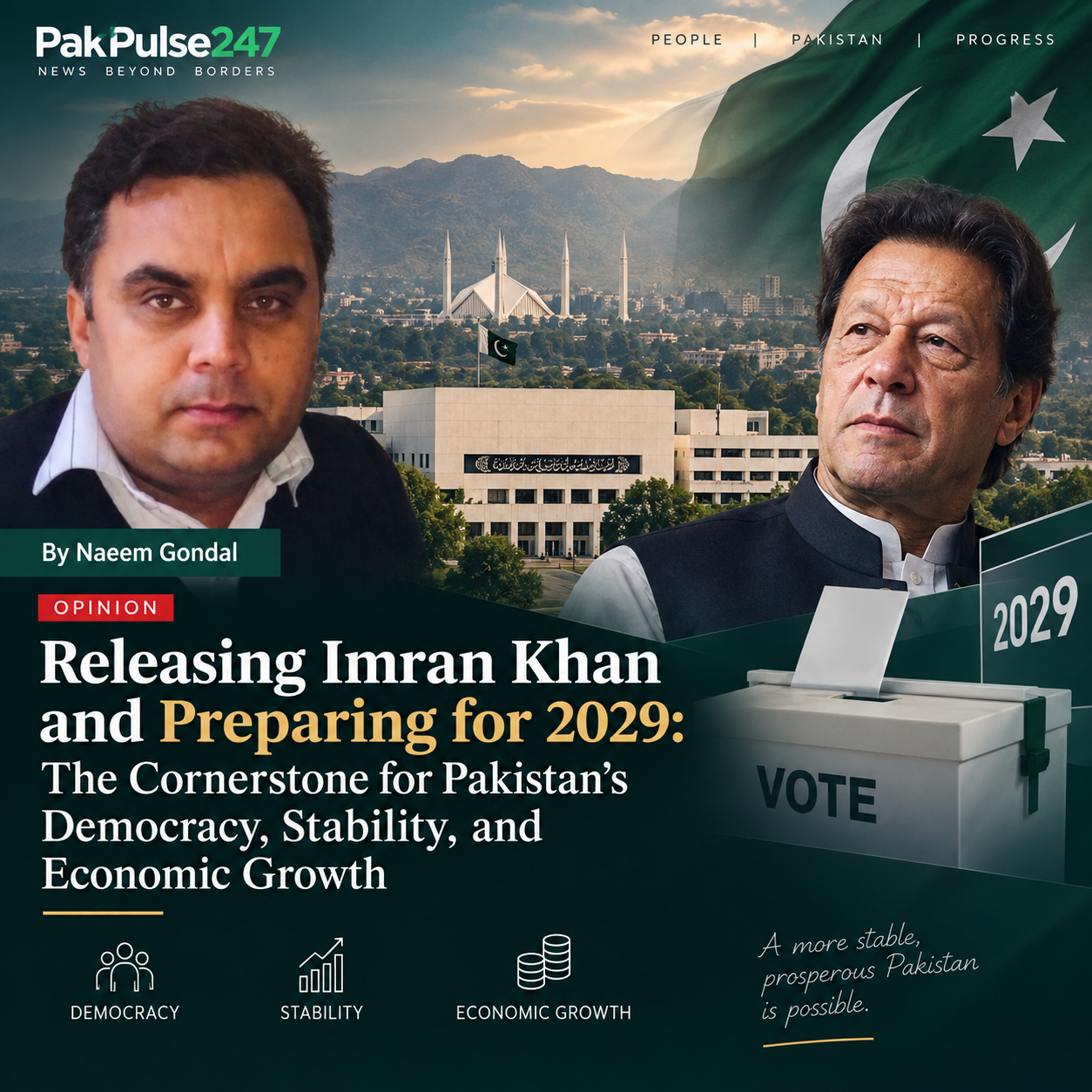
Opinion
Pakistan cannot build lasting economic confidence while its politics remain locked in confrontation. The country needs a deliberate effort to reconcile political differences and prepare for credible elections. For the current leadership, that means acting now, rather than waiting for another electoral crisis.
My argument is straightforward: Imran Khan’s lawful release should be an important confidence-building measure, alongside early preparation for the next constitutional general-election cycle expected in 2029 if the assemblies complete their full terms. Reconciliation, democratic credibility and economic performance belong on the same national agenda.
Reconciliation must respect the rule of law
The PTI founder remains in custody. Recent reporting describes his imprisonment under court sentences; reporting on September 13 also identifies continuing proceedings concerning his medical treatment. His release therefore depends on applicable judicial orders, convictions, appeals and available legal remedies. It cannot be treated as a simple administrative decision by the federal government.
That legal distinction does not diminish the political case for his release. The leadership should support conditions for a lawful resolution through the judicial process, respect court orders and open meaningful channels for dialogue. His lawful release could help lower tensions and make reconciliation more credible. Such an approach would require statesmanship from both the government and the opposition.
Political inclusion should rest on constitutional rights and consistent legal standards. Dialogue becomes more durable when participants can trust the process, rather than depend on temporary accommodations.
Prepare for the next election cycle now
The constitutional timetable needs precision. Under Article 52, the National Assembly ordinarily continues for five years from its first meeting unless dissolved sooner. The present Assembly first met on February 29, 2024. Together with the election provisions in Article 224, this points to a full-term election cycle in 2029. Earlier dissolution would change the timetable; 2029 is not an officially fixed polling date. The Constitution governs the applicable deadlines.
Early preparation should build confidence in electoral rules, transparent administration and effective mechanisms for resolving disputes. Institutional consultation and political dialogue can begin well before campaigning. The purpose is to make the next contest credible enough that its outcome allows government to function.
From political survival to public performance
A predictable democratic process would give the ruling coalition more room to deliver on its manifesto. Citizens deserve to judge an administration by inflation management, employment, education and infrastructure. Those concerns should drive political competition.
In my view, the lesson of the 2018 and 2024 transitions is that Pakistan cannot afford repeated periods in which political confrontation consumes the attention needed for governance. Uncertainty makes long-term planning harder for businesses and households. Reconciliation alone will not solve economic problems, but it can help create the conditions in which sustained reform becomes possible.
The current leadership has an opportunity to leave a democratic legacy: support lawful reconciliation, including Imran Khan’s release through the judicial process, and prepare early for credible elections. Political stability and economic confidence should reinforce each other. Pakistan needs the work to begin now.