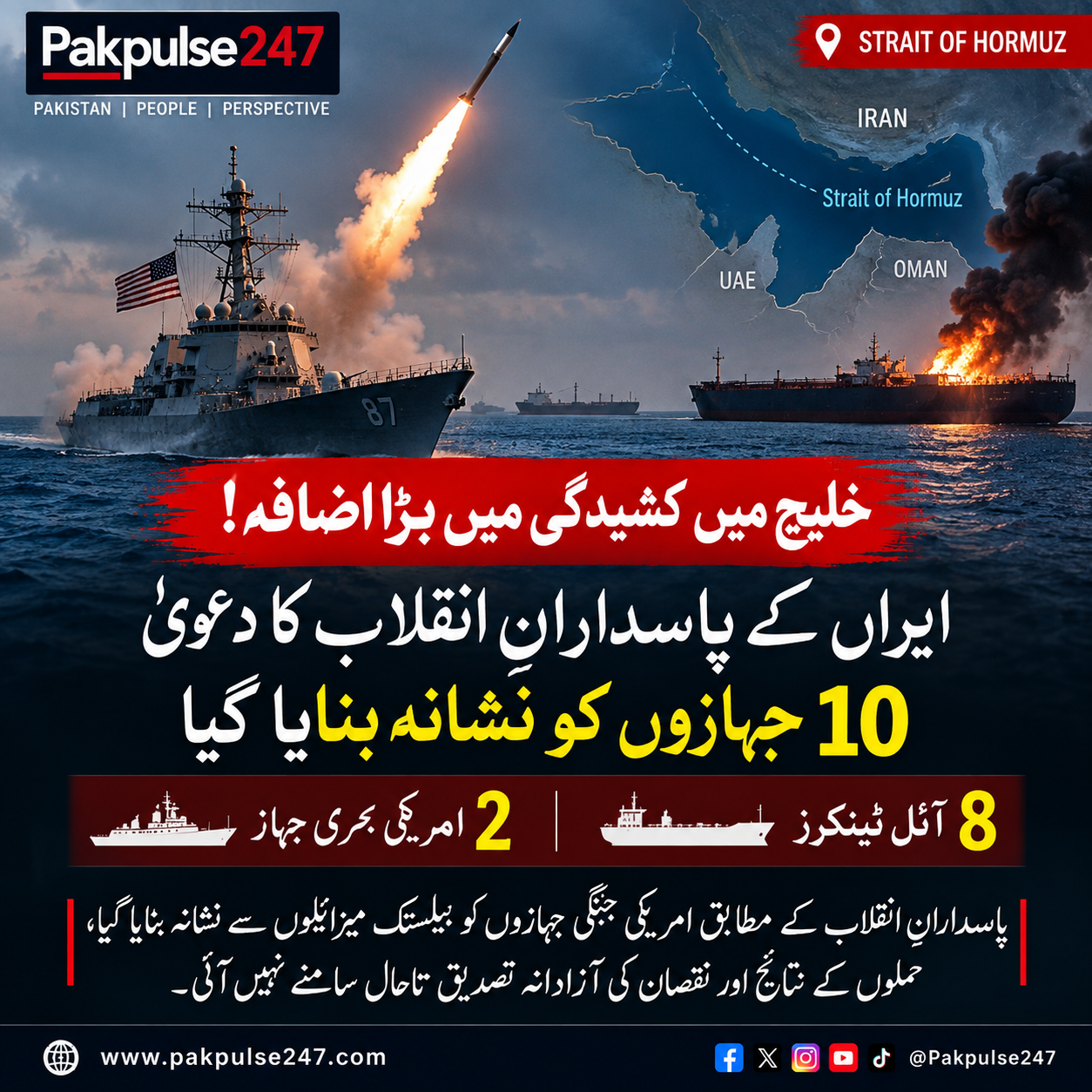
Tensions in the Gulf have escalated sharply after Iran’s Islamic Revolutionary Guard Corps (IRGC) claimed it targeted 10 ships in and around the Strait of Hormuz, including two US vessels and eight oil tankers.
Iranian state media cited the Revolutionary Guards as saying the vessels were attempting to pass through an area Tehran has described as prohibited and unsafe. The latest claim comes amid an intensifying exchange of strikes between Iran and the United States involving warships, oil tankers and military installations across the region. (Reuters)
The extent of any damage to the two US vessels or the eight tankers included in Wednesday’s Iranian claim has not been independently established.
IRGC Says 10 Ships Targeted Near Strait of Hormuz
According to the IRGC statement reported on Wednesday, two American vessels and eight oil tankers were among 10 ships targeted near the Strait of Hormuz.
The development is significant because Hormuz remains one of the world’s most important energy shipping routes, and any prolonged disruption can rapidly affect global crude oil supplies and prices. (Reuters)
While reports circulating online have described the latest attacks on the US vessels as ballistic-missile strikes, available reporting makes an important distinction.
US Central Command says the IRGC had targeted a US Navy warship twice with ballistic missiles during the previous two days. Washington cited those attempted strikes when announcing attacks on five Iranian crude carriers on September 8. The latest IRGC statement about the 10 vessels does not independently establish that both US vessels in Wednesday’s group were struck with ballistic missiles. (Reuters)
US Says Five Iranian Oil Tankers Destroyed
The latest Iranian action followed a US military announcement that American forces had destroyed five Iranian crude oil carriers on September 8.
CENTCOM said the strikes were carried out after attempted Iranian ballistic-missile attacks against a US Navy warship. The United States said no American personnel were harmed in those earlier attempted attacks. (Reuters)
The sequence has created a dangerous cycle of retaliation, with military and commercial vessels increasingly becoming part of the confrontation.
Iran Also Launches Missiles Towards US-Used Base in Jordan
The confrontation was not limited to the Gulf.
Iran’s Revolutionary Guards also said they launched ballistic missiles at a military facility near Al Azraq in Jordan used by US forces.
Iran claimed damage at the facility, but Jordan said its air defences intercepted 18 of 20 missiles, while two landed in unpopulated areas. Jordan reported no casualties, and a US official said American troops were accounted for. (Reuters)
Strait of Hormuz Shipping Traffic Drops
Concern is now increasingly focused on shipping through the Strait of Hormuz.
Preliminary vessel-tracking data showed that only six commodity vessels passed through the strait on Tuesday, compared with nine a day earlier and a 10-day average of roughly 12.
The figures underline how rapidly the military confrontation is affecting commercial shipping through the strategically important waterway. (Reuters)
Oil Prices Move Towards $100
The escalation is also feeding directly into global energy markets.
Brent crude moved close to $100 per barrel on Wednesday, with traders increasingly concerned that attacks on tankers or further disruption in the Strait of Hormuz could tighten global supplies. (Reuters)
For oil-importing countries, including Pakistan, prolonged instability in the Gulf could increase pressure through higher international crude prices, freight costs and broader inflationary risks.
Gulf Conflict Enters More Dangerous Phase
The latest confrontation marks a significant increase in the risk to both military and civilian shipping.
The immediate focus is now on whether the United States responds to Iran’s claim of attacking two American vessels and whether commercial shipping through Hormuz faces further disruption.
At the time of publication, there was no independently verified assessment confirming the scale of damage caused to the vessels named in Iran’s latest claim.
PakPulse247 will continue to update the story as verified information emerges from Iran, US Central Command and regional authorities.
FAQs
How many ships does Iran claim it attacked in the Strait of Hormuz?
Iran’s Revolutionary Guards say they targeted 10 ships, including two US vessels and eight oil tankers. (Reuters)
Were the two US vessels hit by ballistic missiles?
The latest IRGC claim confirms attacks on two US vessels but does not, in the available reporting, independently establish that both were struck by ballistic missiles. The US says Iran had targeted a Navy warship twice with ballistic missiles during the preceding two days. (Reuters)
Why did the United States attack Iranian oil tankers?
US Central Command says it destroyed five Iranian crude carriers after attempted Iranian missile attacks on a US Navy warship. (Reuters)
Why is the Strait of Hormuz important?
It is a critical global energy shipping corridor, meaning military disruption there can quickly affect tanker traffic and international oil prices. Shipping activity has already fallen below its recent average. (Reuters)