
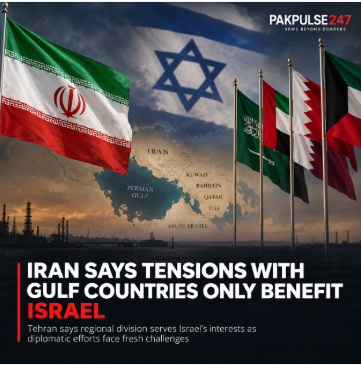
Iran has said that continued tensions between Tehran and the Gulf Arab states are serving Israel’s interests, as regional governments face renewed pressure to prevent further escalation across the Middle East.
Iranian Foreign Ministry spokesperson Esmail Baghaei said differences between Iran and neighbouring Gulf countries should not be allowed to deepen, arguing that Israel would be the main beneficiary of any prolonged division in the region.
The remarks come at a sensitive moment for Gulf diplomacy, with efforts underway to reduce tensions between Iran and Arab states and prevent security disputes from developing into a wider regional confrontation.
Iran Calls for Regional Understanding
Tehran has increasingly stressed the need for dialogue with Gulf countries, particularly at a time when maritime security, energy supplies and developments around the Strait of Hormuz remain major concerns for governments across the region.
Iran’s position is that closer coordination among regional states could reduce outside influence and create greater stability in the Gulf.
Baghaei’s comments also reflect Tehran’s broader effort to persuade neighbouring countries that confrontation between Iran and Gulf states would weaken regional security rather than resolve existing disagreements.
Gulf Diplomacy Faces Fresh Pressure
Relations between Iran and several Gulf countries have gone through periods of engagement as well as tension in recent years.
Recent developments have again placed regional security at the centre of diplomatic discussions, with Gulf governments attempting to protect their economic and security interests while avoiding a broader military confrontation.
A planned regional meeting involving Iran and Gulf states in Oman has also faced delays, highlighting the difficulties surrounding efforts to reach a common understanding on key security and maritime issues.
Strait of Hormuz Remains a Key Concern
The Strait of Hormuz remains one of the most strategically important waterways in the world because a significant share of global energy supplies passes through the region.
Any prolonged confrontation involving Iran and Gulf countries could therefore have consequences beyond the Middle East, particularly for oil markets, shipping routes and international trade.
Regional states have repeatedly emphasised the importance of keeping communication channels open and preventing military escalation from threatening commercial shipping and energy infrastructure.
Tehran Pushes Message of Regional Unity
Iran’s latest statement appears aimed at shifting attention toward regional cooperation rather than confrontation.
By arguing that Israel benefits from divisions between Iran and Gulf countries, Tehran is seeking to encourage neighbouring states to resolve disputes through dialogue and maintain direct diplomatic engagement.
The coming days will be important for regional diplomacy as Iran and Gulf governments consider whether stalled discussions can be revived and whether a broader framework for reducing tensions can be developed.