
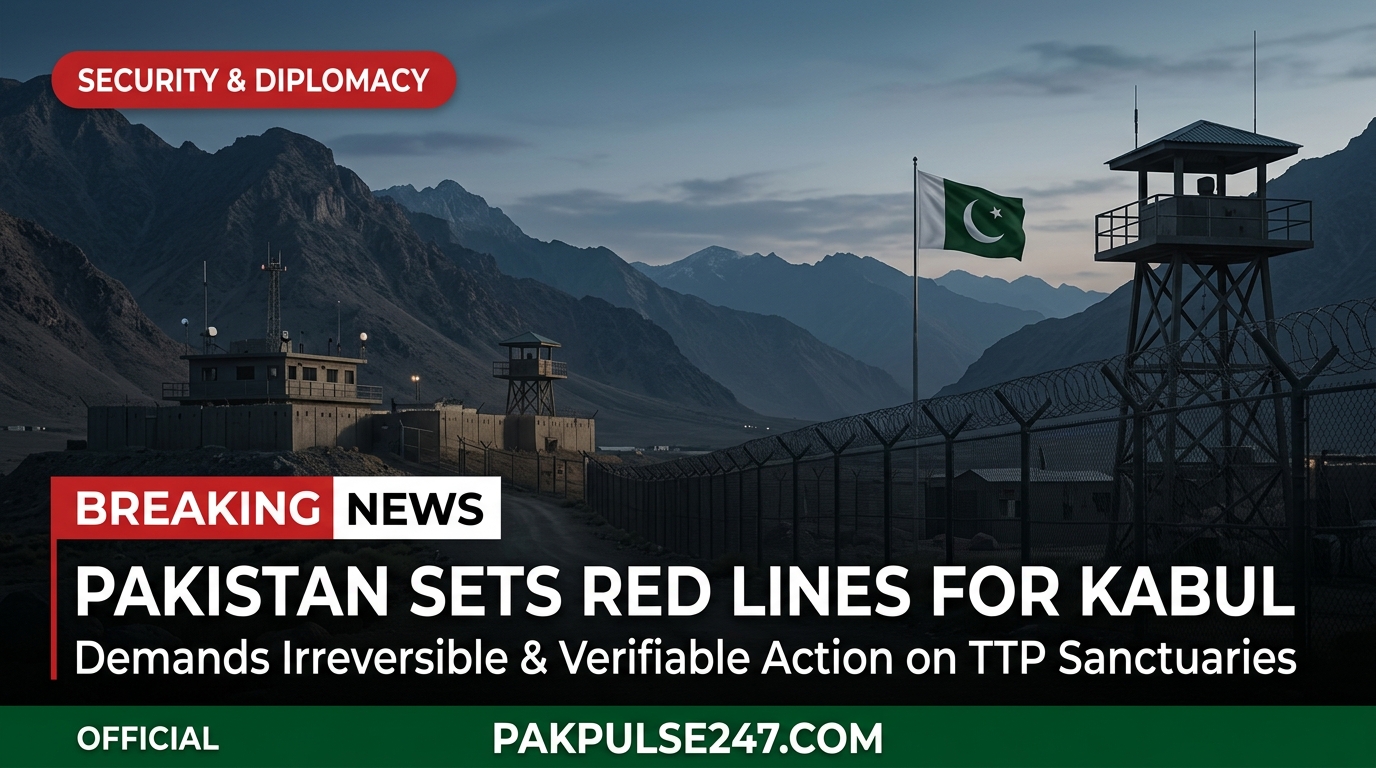
Pakistan has delivered an unambiguous diplomatic warning to Afghanistan's interim authorities, declaring that the persistent presence of cross-border sanctuaries utilized by the banned Tehreek-e-Taliban Pakistan (TTP) constitutes an unacceptable breach of bilateral sovereignty and regional peace.
Speaking at an international conference convened by the Institute of Strategic Studies Islamabad (ISSI), Deputy Prime Minister and Foreign Minister Senator Ishaq Dar stated that Islamabad expects "verifiable, concrete, and irreversible actions" from Kabul to eliminate terrorist launchpads along the Pak-Afghan frontier.
Diplomatic Red Lines and Cross-Border Security
Dar emphasized that while Pakistan remains firmly committed to constructive trade transit and humanitarian engagement with the Afghan people, state security cannot be compromised. The foreign minister noted that hostile elements continue to exploit ungoverned spaces across the border to orchestrate fatal cross-border incursions targeting Pakistani civilians and security personnel in Khyber Pakhtunkhwa and Balochistan.
Security agencies have repeatedly shared actionable intelligence dossiers with the Afghan interim administration identifying operational hideouts, training facilities, and procurement logistics of militant networks. Pakistan reiterated that regional stability depends directly upon Kabul honoring its international counter-terrorism pledges.
Strategic Posture and Border Fortification
Alongside diplomatic channels, Pakistan has heightened kinetic readiness and surveillance arrays along the 2,600-kilometer fenced border. Electronic tracking towers, drone surveillance, and reinforced Frontier Corps garrisons remain on elevated operational alert to interdict infiltration attempts.
Foreign policy analysts at the ISSI conference noted that Islamabad's firm articulation reflects a coordinated national strategy, balancing robust deterrence at the border with regional multilateral consensus-building under upcoming Shanghai Cooperation Organisation (SCO) frameworks and broader international diplomatic and security engagements.