
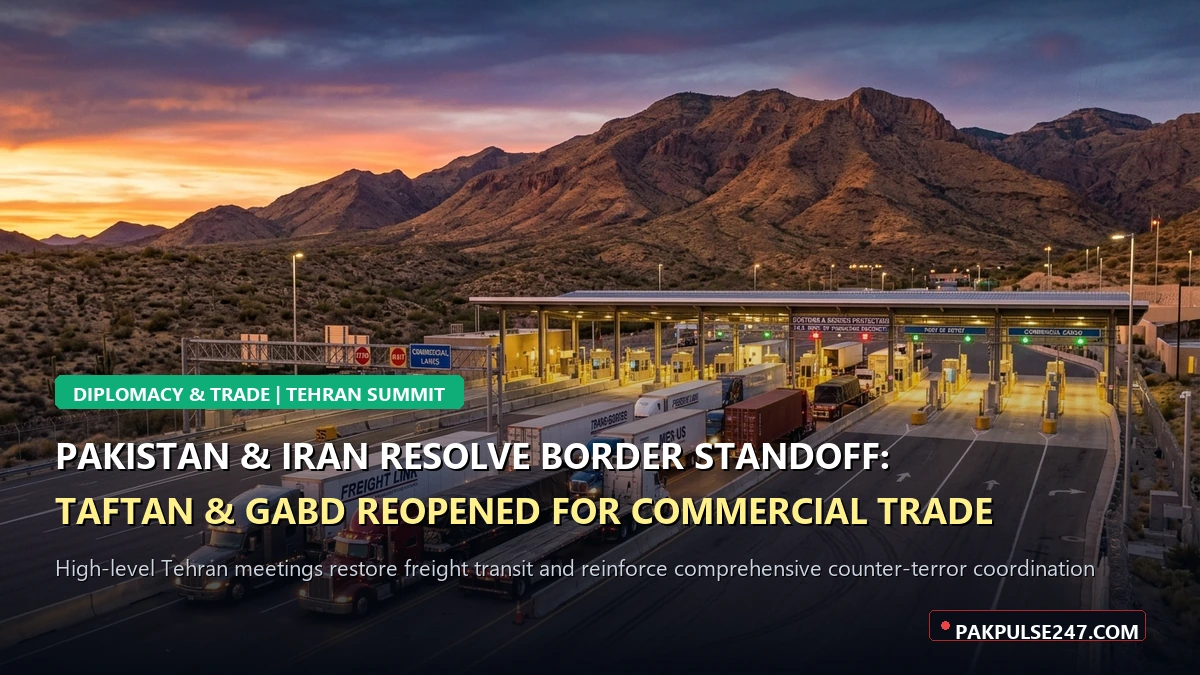
TEHRAN / ISLAMABAD — In a decisive breakthrough aimed at restoring regional connectivity and commercial logistics, Pakistan and the Islamic Republic of Iran have successfully resolved recent operational and security restrictions along their 900-kilometre frontier. Following intensive high-level diplomatic and border consultations in Tehran involving Pakistani Interior Minister Mohsin Naqvi and Iranian President Masoud Pezeshkian, both nations have officially reopened the strategic Taftan-Mirjaveh and Gabd-Rimdan border terminals for unrestricted commercial cargo transit.
High-Level Diplomatic Engagement in Tehran
The high-level discussions in the Iranian capital brought together key stakeholders from both governments, including Iranian Parliament Speaker Mohammad Bagher Ghalibaf and senior national security coordinators. The talks addressed broader regional peace, counter-terrorism synchronization, and the immediate imperative of normalizing cross-border economic activity that directly supports local frontier communities in Balochistan and Sistan-Baluchestan.
Iranian President Masoud Pezeshkian emphasized that close economic integration, security synchronization, and enhanced customs modernization serve as indispensable pillars for enduring bilateral stability. Pakistani delegates underscored Islamabad’s steadfast commitment to ensuring robust, secure trade corridors while combating cross-border smuggling networks and non-state extremist elements.
Resumption of Commercial Freight at Taftan and Gabd
The resolution follows a temporary precautionary pause instituted earlier this week at the Taftan Zero Point and National Logistics Cell (NLC) dry port terminal, where hundreds of commercial container trucks and petroleum tankers had been directed to secure holding bays. Customs clearance operations have now resumed at full capacity across all terminal gates.
Under the mutually agreed framework, joint border monitoring committees have instituted upgraded biometric tracking for freight operators, enhanced electronic cargo manifests, and streamlined customs inspection protocols. The restoration of trade clears stranded consignments of liquefied petroleum gas (LPG), petrochemical feedstock, perishable food items, and construction materials destined for industrial hubs in Pakistan.
Strategic Stability and Economic Connectivity
Chambers of commerce across Quetta, Gwadar, and Zahedan warmly welcomed the reopening of the border gates, highlighting that daily trade at Taftan and Gabd accounts for billions of rupees in regional commerce and essential consumer goods. In addition to commercial normalization, both countries agreed to maintain continuous intelligence-sharing mechanisms and conduct regular meetings of border liaison officers to preempt potential security friction.
Diplomatic observers noted that the swift resolution of border tensions underscores the maturity of Pakistan-Iran bilateral channels amid broader Middle Eastern geopolitical volatility. For real-time updates on cross-border logistics and international diplomatic affairs, explore the PakPulse247 News section and National affairs portal.