
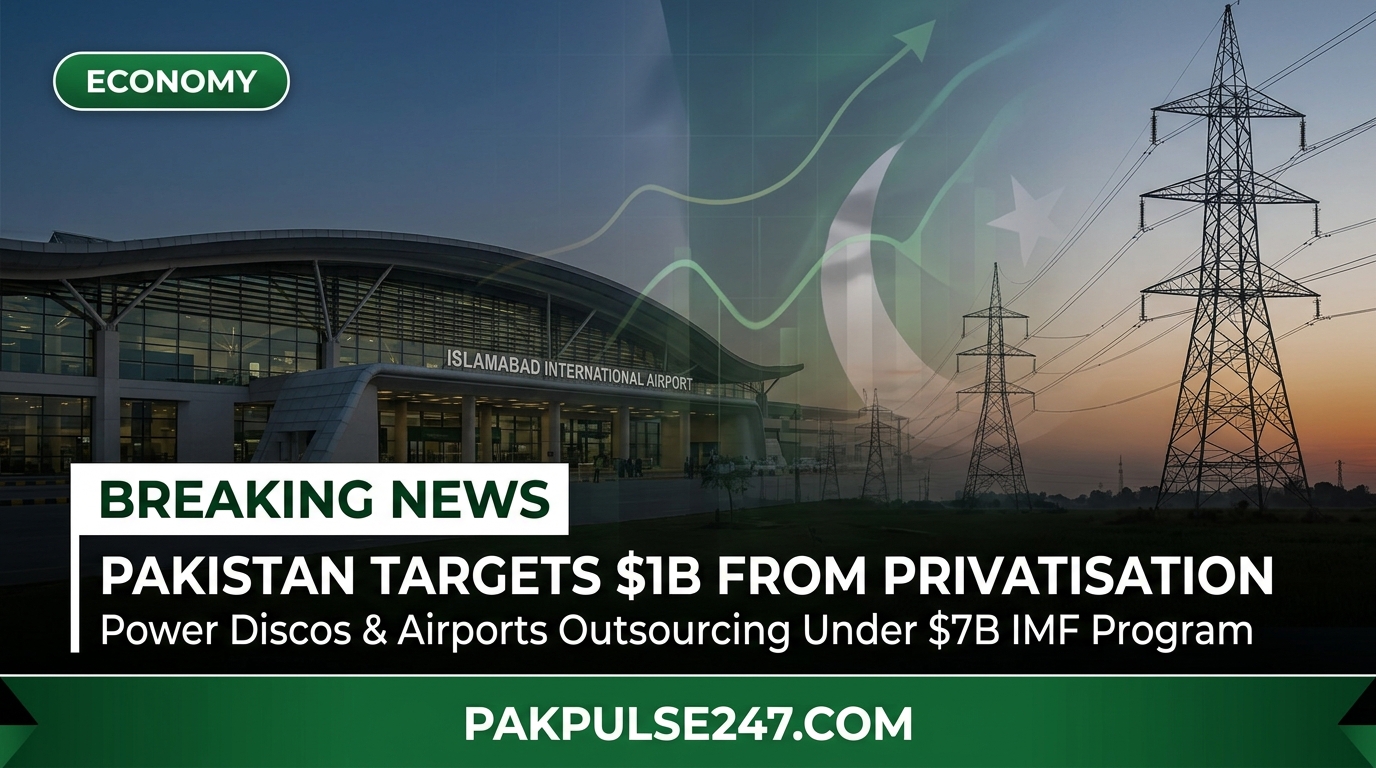
Pakistan is actively moving to raise more than $1 billion during the current fiscal year through the strategic privatisation of state-owned enterprises, including power distribution companies (Discos) and the commercial outsourcing of major airports, Federal Minister for Finance and Revenue Muhammad Aurangzeb announced.
Speaking on the sidelines of the annual meetings of the International Monetary Fund and the World Bank in Bangkok, Aurangzeb stated that structural economic benchmarks established under Pakistan's 37-month, $7 billion Extended Fund Facility (EFF) are being rigorously implemented. The government aims to bring five to six major state entities to market before the close of the fiscal cycle, addressing long-standing fiscal hemorrhaging across public-sector monopolies.
Power Sector Reforms and Circular Debt Reduction
Reforming the power sector represents the cornerstone of the government's economic agenda. The accumulated circular debt in the power division, estimated at over Rs1.67 trillion, has historically constrained public finances and deterred international investments. Aurangzeb highlighted that transferring operational control of regional Discos to private management concessions will plug transmission losses, improve collection efficiency, and curb systematic power theft.
Concurrently, the Ministry of Aviation and the Privatisation Commission are concluding transactional frameworks for outsourcing commercial operations at Islamabad, Karachi, and Lahore international airports to reputed international airport operators, drawing foreign direct investment without forfeiting sovereign asset ownership.
Macroeconomic Stability and Growth Trajectory
Despite broader regional geopolitical volatility in the Middle East that has introduced unpredictable shifts in global crude oil and liquefied natural gas benchmarks, Pakistani economic authorities expressed confidence in maintaining national energy security and preventing supply shocks.
The finance minister reiterated that ongoing revenue enhancements—including Federal Board of Revenue measures to expand tax compliance among non-filers and formalise agricultural income taxation across the provinces—have stabilized the current account balance and bolstered foreign exchange reserves. With inflation continuing its downward trajectory, the government maintains a projected real GDP growth target north of 4 percent for the fiscal year, closely aligning domestic fiscal reform with broader regional diplomatic and trade developments.