
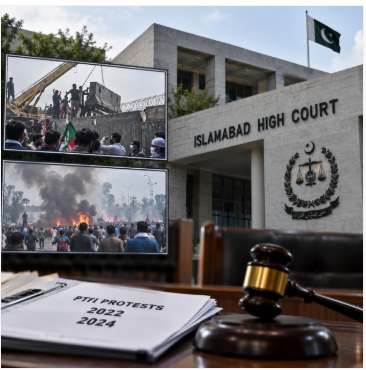
Videos related to Pakistan Tehreek-e-Insaf’s protests in 2022 and 2024 were presented before the Islamabad High Court as past demonstrations once again came under judicial scrutiny.
During the hearing, the Advocate General Islamabad told the court that protesters had used machinery during the demonstrations and that cranes were deployed to remove barriers placed in their way.
He further submitted that fires were set in and around D-Chowk, resulting in damage to property.
According to the Advocate General, the events could not be described as an ordinary peaceful political gathering or protest. He argued that a similar pattern was witnessed during the 2024 demonstrations, when protesters again moved towards key areas of Islamabad while attempting to cross or remove security barriers.
Why the 2022 and 2024 protests are being discussed
The previous protests were raised in court as part of the wider legal debate surrounding PTI’s protest activities in the federal capital.
The proceedings have brought renewed attention to the balance between a political party’s constitutional right to hold demonstrations and the responsibility of the administration to maintain public order, protect property and ensure that roads and essential routes remain accessible to citizens.
The government’s legal representatives referred to previous incidents to support their position that authorities must take earlier protest-related events into account while making security arrangements for future demonstrations.
At the same time, questions involving the right to peaceful protest, the scope of administrative restrictions and compliance with court orders remain part of the broader legal proceedings.
D-Chowk again becomes a key point in the hearing
Islamabad’s D-Chowk has remained a prominent location for major political protests and marches over the years.
During the latest hearing, references to the 2022 protest included the removal of barriers, the use of cranes and incidents of fire and property damage in and around the area.
The claims and material presented before the court form part of the legal arguments being advanced in the case. Any final determination regarding responsibility, the nature of the protests or alleged violations will depend on the court’s findings and subsequent proceedings.
The case remains significant because it involves the competing considerations of political expression, public order and the fundamental rights of residents of the federal capital.