
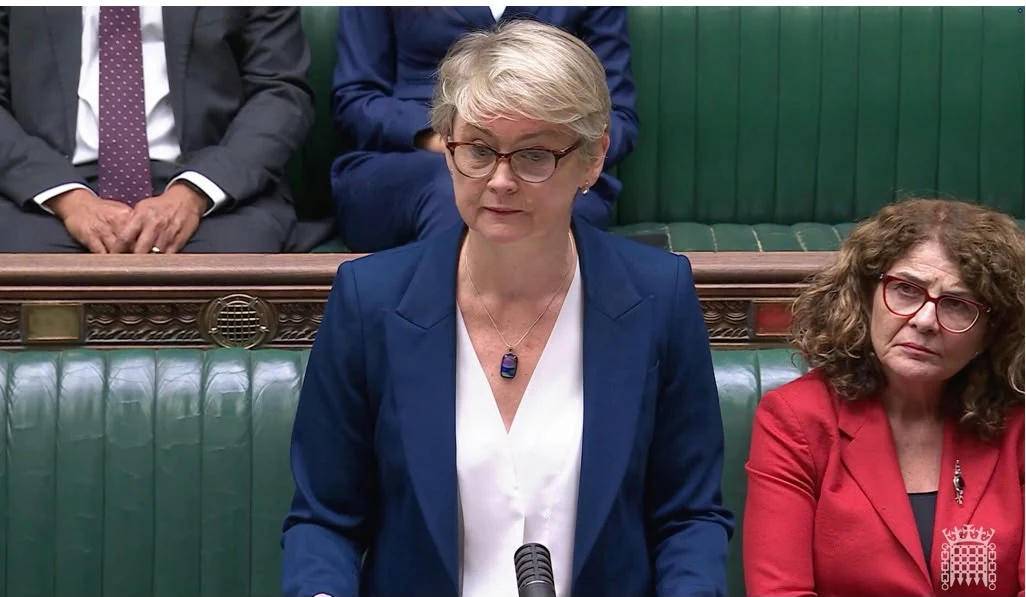
Britain’s Health Secretary has urged the NHS to learn from what she called profound failures exposed by the public inquiry into events surrounding Lucy Letby’s crimes at the Countess of Chester Hospital.
Yvette Cooper told Parliament that the findings should become a turning point for the health service after Lady Justice Kathryn Thirlwall identified dysfunctional management and a failure to protect babies when concerns emerged in the neonatal unit.
The Thirlwall Inquiry’s final report, presented to Parliament on Tuesday, found that earlier action could have saved some babies and prevented other attacks. It examined the hospital’s response, patient-safety systems and the treatment of affected families. It did not reconsider Letby’s criminal convictions.
Warnings were not acted on quickly enough
Doctors had raised concerns after babies died or unexpectedly became seriously ill. The inquiry found that managers did not respond appropriately, safeguarding procedures were not invoked and police were contacted only after a prolonged delay.
Staff who raised the alarm were treated as a problem instead of having their concerns investigated with the urgency required. Families were also kept without vital information about concerns that their babies might have been deliberately harmed.
The inquiry concluded that two babies would have survived and a third might have survived had the hospital acted differently. It also found that other attacks could have been prevented.
What the inquiry recommended
The inquiry issued 17 recommendations covering patient safety, monitoring, safeguarding, management accountability and regulatory oversight.
They include fitting neonatal cots and incubators with cameras that allow parents to watch their babies remotely, tighter controls around insulin, better monitoring of child and infant deaths, and a clear national protocol for responding to suspicions that a healthcare professional has deliberately harmed a patient.
Lady Justice Thirlwall also called for a barring system for NHS managers, stronger duties of candour and more rigorous, unannounced inspections by the Care Quality Commission.
Cooper said the government was reviewing the recommendations and had begun work on the proposal for cameras in neonatal units.
Letby’s convictions and continuing challenge
Letby, a former neonatal nurse, was convicted across two trials of murdering seven babies and attempting to murder seven others. She is serving 15 whole-life prison terms and has maintained her innocence.
Her legal team has submitted material to the Criminal Cases Review Commission as it seeks another challenge to the convictions. That process is separate from the Thirlwall Inquiry, whose mandate concerned institutional conduct and the protection of babies and families.
The report places the focus on whether NHS staff can raise concerns safely, whether leaders respond promptly and whether lessons from major inquiries lead to measurable changes across the health service.