
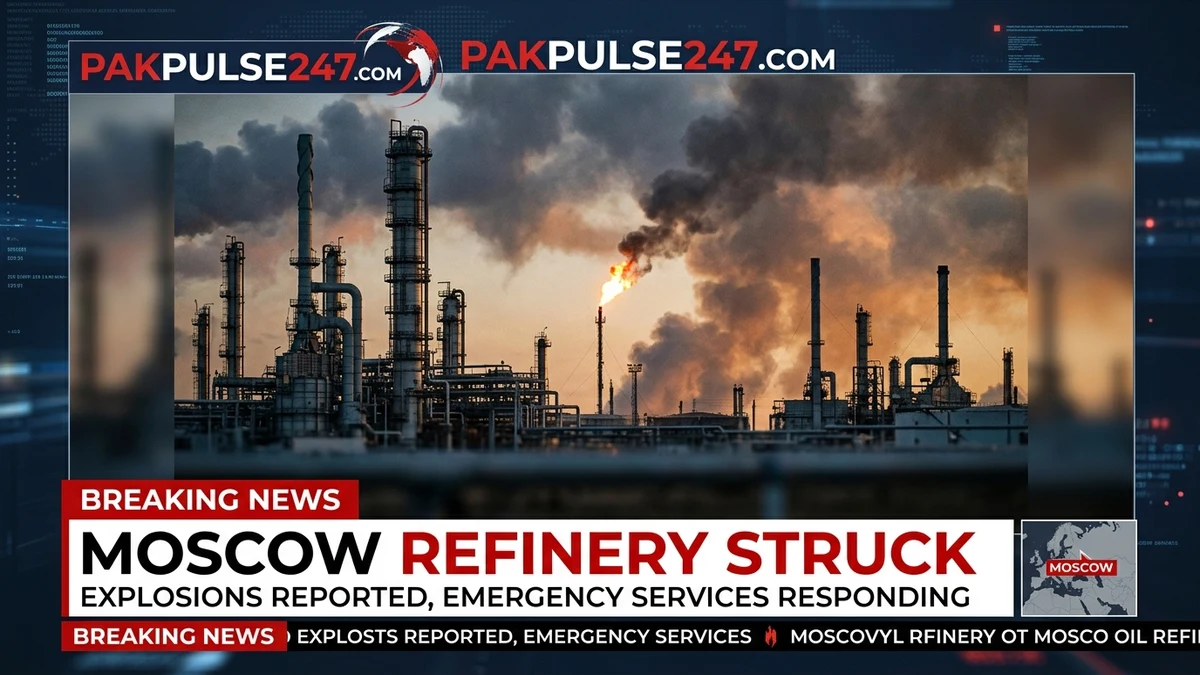
A coordinated Ukrainian drone barrage struck the Gazprom Neft Moscow Oil Refinery in the capital's southeastern Kapotnya district early Monday, September 21, 2026, forcing a complete shutdown of its primary crude distillation units and triggering emergency fuel supply realignments across the region.
The high-impact Moscow oil refinery drone strike represents one of the deepest and most disruptive industrial hits on Russian energy infrastructure since the conflict began. According to industry operators and emergency personnel, explosive unmanned aerial vehicles detonated inside the refinery perimeter, setting off intense blazes within the facility's AVT-6 primary crude distillation unit as well as the high-capacity EURO+ combined refining complex.
Critical Distillation Units Disabled in Kapotnya
The simultaneous strikes knocked out the plant's core distillation infrastructure, depriving the facility of its primary capacity to separate incoming crude oil into petroleum feedstocks. Technical assessments indicate that repairing the sophisticated catalytic and distillation towers will require several weeks of specialized engineering work, effectively paralyzing refining operations at the capital's principal domestic fuel supplier.
The Kapotnya installation is vital to regional energy stability, conventionally supplying approximately 40 percent of Moscow's gasoline and diesel fuel and nearly 70 percent of the aviation kerosene demanded by the metropolitan area's major transport hubs. The operational halt has prompted energy planners to divert secondary reserves from neighboring facilities in Ryazan and Yaroslavl to buffer metropolitan fuel distribution.
Fuel Trading Suspended on St. Petersburg Exchange
The physical fallout quickly resonated through Russian domestic financial markets. On Monday morning, products originating from the Moscow Oil Refinery were abruptly withdrawn from regular spot trading on the St. Petersburg International Mercantile Exchange (SPIMEX). Traders reported that wholesale contracts for high-octane gasoline and ultra-low sulfur diesel were frozen to mitigate market panic as distributors assessed regional supply deficits.
Industry analysts noted that while strategic reserves remain available, protracted downtime at the Kapotnya refinery could drive local wholesale fuel benchmarks higher and strain regional logistics corridors already dealing with increased transport costs. Readers tracking global energy shifts and economic fallout can follow updates on PakPulse247 News.
Record Drone Barrage and Regional Casualties
The refinery strike was part of an unprecedented aerial onslaught across western and central Russia over the weekend, coinciding with the concluding stages of Russia's nationwide parliamentary elections. Moscow Mayor Sergei Sobyanin confirmed that Russian air defenses had engaged scores of incoming drones, describing the barrage as the largest concentrated assault directed toward the metropolitan area.
Russian defense authorities reported tracking and intercepting upwards of 1,600 drones across multiple oblasts, with roughly 450 targeted specifically toward the Moscow region. While military spokesmen claimed the majority of incoming projectiles were neutralized by electronic warfare systems and surface-to-air missiles, falling debris and direct impacts ignited fires and damaged structures. Regional officials confirmed at least three civilian fatalities and numerous injuries after drone fragments struck a multi-story residential building in the wider Moscow oblast.
Strategic Shift and Long-Range Weapons Arsenal
In Kyiv, Ukrainian President Volodymyr Zelenskyy confirmed the execution of deep precision strikes against Russian logistical and economic installations that sustain frontline operations. Ukrainian defense officials stated that the operation utilized domestically developed long-range strike capabilities, including newly deployed winged drones and cruise platforms designed to bypass radar detection networks. The operational escalation aligns with ongoing drone warfare developments that have transformed tactical logistics across the theater.
The Ukrainian General Staff stressed that energy facilities directly feeding military fuel reserves and mechanized divisions represent lawful targets under the rules of armed conflict. In response, Russian officials condemned the strikes as reckless aggression intended to influence public sentiment during the election cycle, pledging intensified retaliatory counterstrikes against Ukrainian infrastructure.