
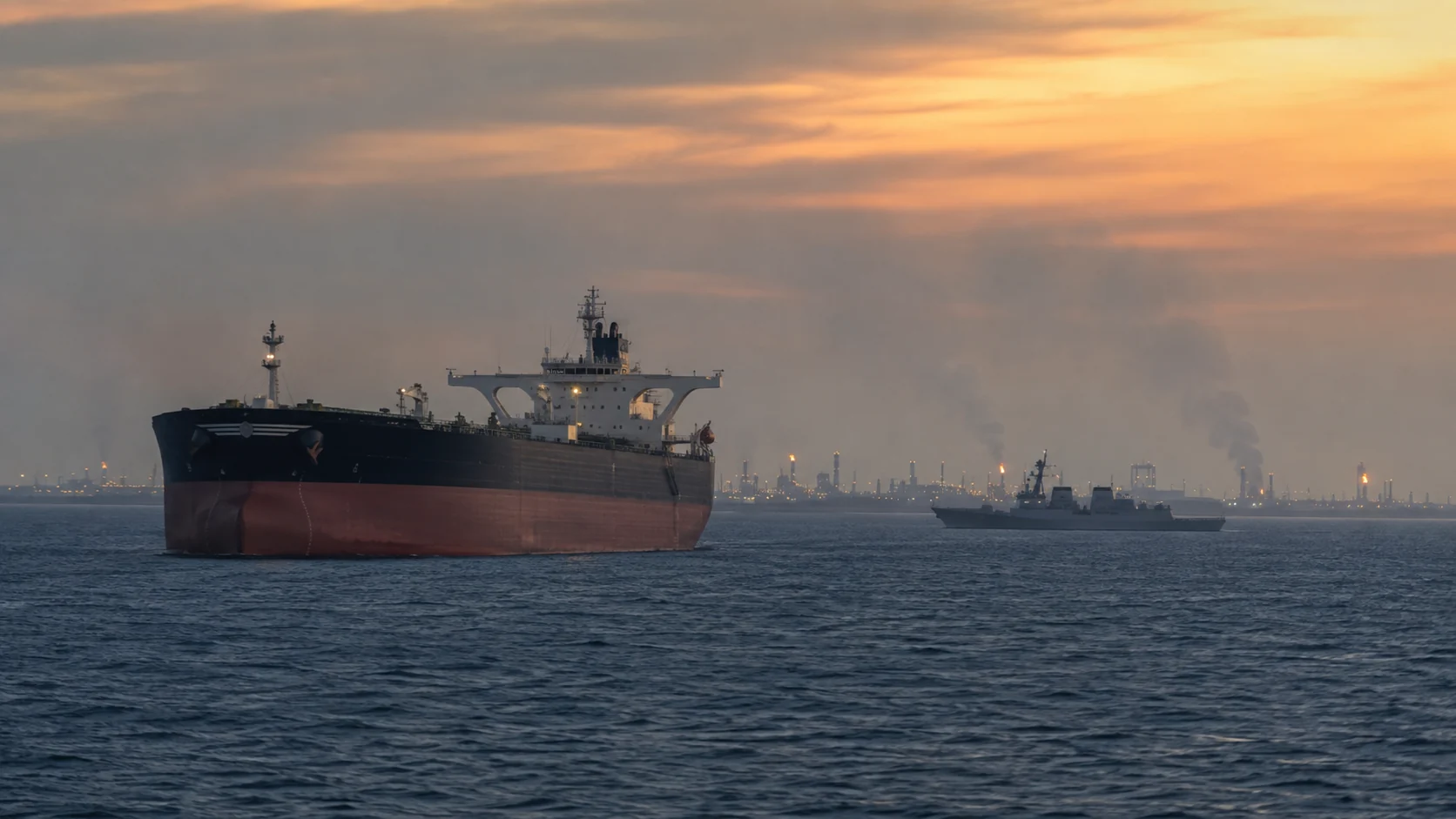
The uneasy pause in the Gulf has broken again. US forces struck three Iranian oil tankers on Saturday after American officials said Iranian ballistic missiles had targeted two US Navy warships, raising fresh fears that a contained exchange could spill into a wider confrontation.
US Central Command said an aircraft carrier and a guided-missile destroyer evaded the incoming missiles. It then attacked three crude carriers that Washington describes as part of a network financing Iran’s Islamic Revolutionary Guard Corps and its regional allies.
According to The Associated Press, two tankers were disabled and a third was destroyed. Iranian state television reported that missiles hit a vessel roughly 10 kilometres from Kharg Island, the hub through which much of Iran’s exported oil passes.
Why the location matters
Kharg Island is more than a point on a map. It sits at the centre of Iran’s oil-export system, making any military activity nearby especially sensitive for energy markets and shipping companies. Even when physical damage is limited, the prospect of repeated attacks can increase insurance costs, complicate routes and revive concern about traffic through the Strait of Hormuz.
The latest exchange follows a month of relative calm in a conflict that has repeatedly moved between direct strikes, threats and attacks on commercial shipping. That pattern makes the next response difficult to predict: each side has tried to signal resolve while stopping short of declaring an unlimited war.
Iranian accounts and the US military’s version differ on the circumstances and effects of several recent strikes. Independent confirmation from the affected vessels and crews remained limited at the time of publication. There were no immediate, independently verified reports of casualties from Saturday’s tanker attacks.
What happens next
The immediate question is whether Tehran answers at sea, targets military positions elsewhere in the region or chooses to absorb the strike. A further attack on shipping would quickly move the story beyond a bilateral military exchange because the Gulf carries energy supplies used across Asia and Europe.
Pakistan also has reason to watch closely. Higher freight and insurance costs can feed into the price of imported fuel, while a prolonged disruption would put pressure on countries that depend on Gulf energy routes. That does not mean a price shock is inevitable, but the risk grows each time commercial vessels become part of the confrontation.
Washington has warned that it may strike more of Iran’s oil fleet if attacks continue. For now, Saturday’s action is another sharp escalation—and a reminder that the region’s brief periods of quiet remain fragile.